November 2025 was a busy month for Microsoft Copilot Studio, marked by major announcements at Microsoft Ignite 2025 and a wave of new features now rolling out to makers. It’s clear that organizations are moving beyond traditional automation and into a new era of agent-driven work. In this month’s roundup, we’re spotlighting our most significant Ignite updates and introducing powerful new capabilities you can start using today.
Add curated Outlook and SharePoint tool groups to agents for faster setup
Makers can now streamline agent configuration by adding curated Action Groups from Outlook and SharePoint connectors, now in preview. Instead of identifying and configuring individual actions one by one, teams can bring in complete sets of related tools, such as “manage emails” or “manage files,” with a single selection. This makes it easier to equip agents with the capabilities they need to support common workflows across communication and content management.
Each Action Group contains the most relevant and reliable tools for its scenario. Shared inputs automatically apply across the group to reduce setup time and improve consistency. Makers can either specify their own values or opt to have AI dynamically fill inputs based on context. Try it both ways – each action is fully editable even after it’s added. This flexibility helps ensure agents behave predictably while still allowing customization for unique business processes.
To use Action Groups, open an agent’s Tools section, select Add tool, choose Outlook or SharePoint, and pick the tool group you want to add. This provides a faster, clearer, and more guided way to build workflow-ready agents. Learn more about Action Groups.
SharePoint grounding: Turning content chaos into decision clarity
Any team that uses SharePoint knows that it can sometimes be tough to find exactly the nugget of information you need among all your content. Fortunately, If you’re using SharePoint as a knowledge source, your agents just got a lot smarter. We shipped an upgraded tenant graph grounding architecture that improves how agents retrieve and rank information across your organization. This translates into more precise, more context-aware responses, especially in content-heavy environments.
On top of that, you can now filter SharePoint content using metadata like filename, owner, and last modified date. That gives you much tighter control over which documents your agents rely on when answering questions.
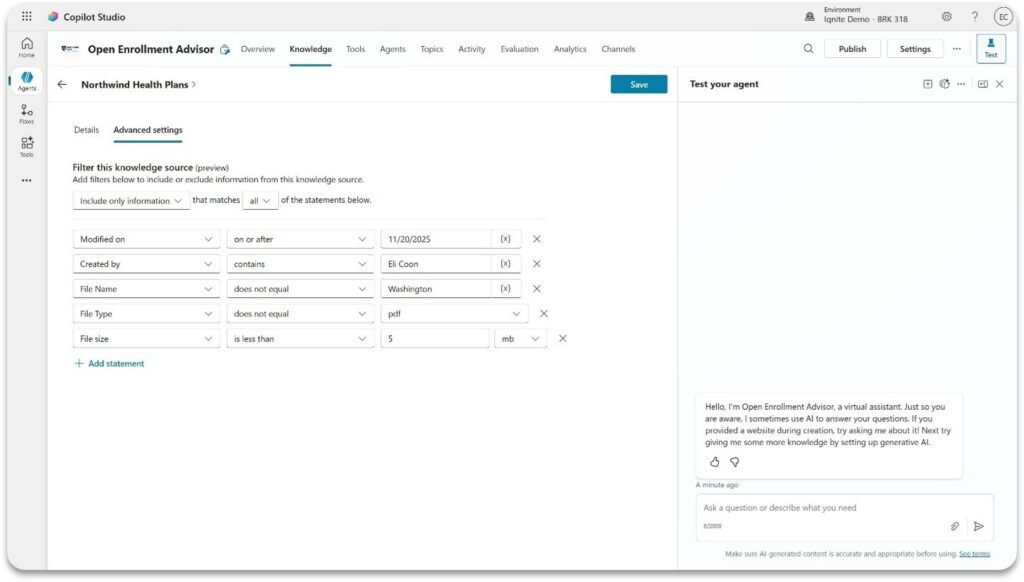
Learn more about these features and using SharePoint as a knowledge source.
Agent Builder enhancements and new features
Use the latest GPT-5 Chat capabilities in Agent Builder
Microsoft 365 Copilot now uses GPT-5 Chat when responding to prompts in agents created with Agent Builder. This brings immediate improvements to speed, quality, and accuracy in carrying out instructions. Organizations relying on agents built in Microsoft 365 Copilot will see immediate quality improvements in employee support, decision guidance, and informational use cases. No additional configuration or opt-in is required where GPT-5 Chat is available.
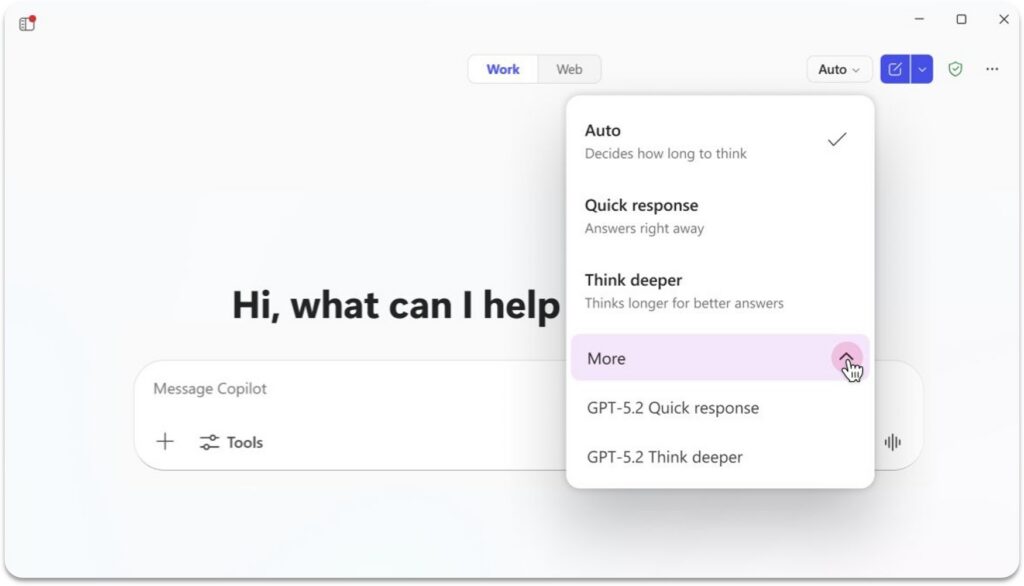
GPT-5.2 is also now available to use in Microsoft 365 Copilot with both web and work data. This new model series brings improved code generation and multilingual capabilities. Users with a Microsoft 365 Copilot license received priority access to GPT-5.2 on December 11th, 2025, and the series is expected to be available to all users in the coming weeks.
Extend your agent seamlessly from Agent Builder to Copilot Studio
Makers can now seamlessly move agents built in Agent Builder (the lightweight agent-building experience inside Microsoft 365 Copilot) into the full Copilot Studio application using the new “Copy to Copilot Studio” action. This capability is generally available everywhere Agent Builder is supported.
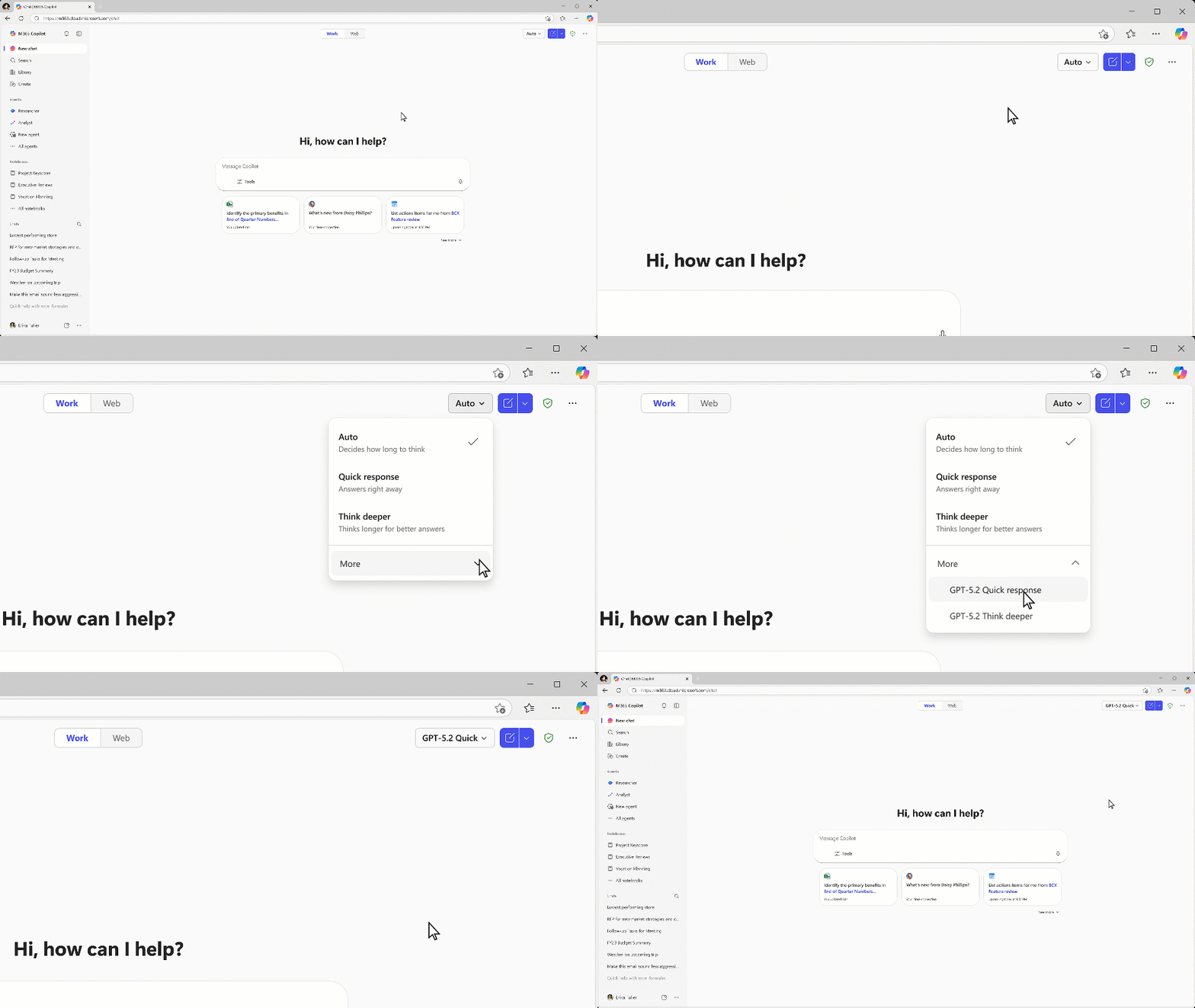
This feature allows makers to start prototypes quickly in Microsoft 365 Copilot and then expand them into fully governed, enterprise-ready Copilot Studio agents without rebuilding from scratch. The copy operation creates a version of the agent in the selected environment while preserving the original in Agent Builder. In addition to providing peace of mind, this means your users can still partake in the existing experience while the enhanced version is developed.
Once an Agent gets copied into Copilot Studio, makers gain access to a suite of richer capabilities. This includes lifecycle management, analytics, more third-party connectors, and publishing options that give agents access to channels such as the Teams app store. This helps create a healthy innovation cycle: fast at the edges, controlled at the core. Learn more about copying agents to Copilot Studio.
Streamline employee support with the Employee Self-Service Agent
The Employee Self-Service Agent in the Microsoft 365 Copilot agent building experience is now generally available. This agent provides a centralized AI-powered experience for common employee support scenarios, including HR- and IT-related needs. The Employee Self-Service Agent helps employees quickly get answers and complete tasks such as checking leave balances, reviewing benefits, or submitting IT tickets. This agent provides a centralized AI-powered experience for common employee support scenarios, including HR- and IT-related needs. The Employee Self-Service Agent helps employees quickly get answers and complete tasks such as checking leave balances, reviewing benefits, or submitting IT tickets.
Built for makers to configure and extend in Copilot Studio, the agent includes prebuilt connectors and workflows for systems like Workday, ServiceNow, and SAP SuccessFactors. It’s fully customizable and extensible. This allows teams to tailor responses, logic, and integrations to their own organizational processes.
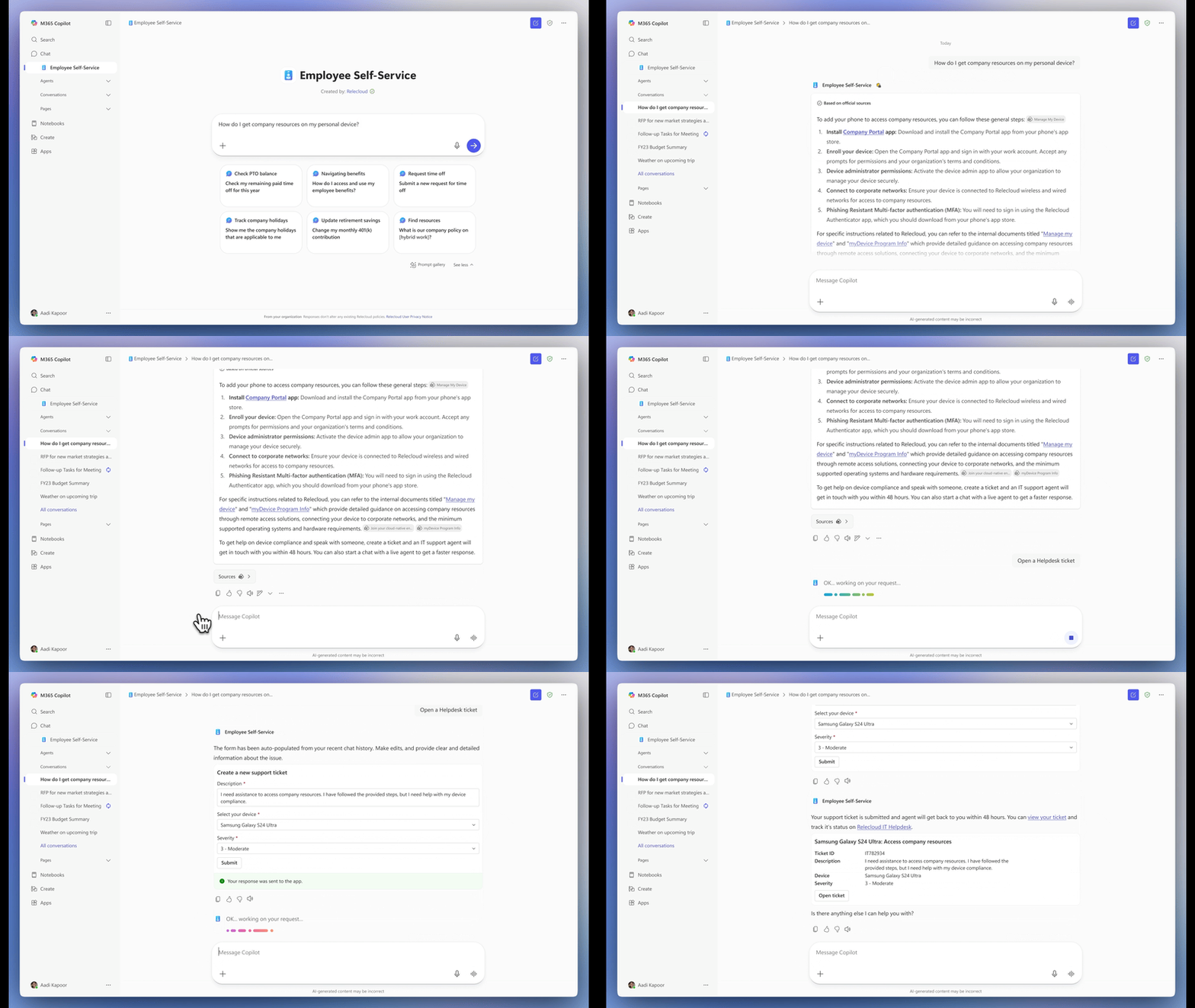
To keep employees in their flow of work, the agent can also hand off to Workday or ServiceNow agents when deeper actions are required. This means that instead of employees navigating portals or emailing multiple teams, they can simply ask for what they need. From a business lens, this reduces ticket backlogs, shortens resolution times, and improves employee sentiment.
The Employee Self-Service Agent is designed to work within your existing Microsoft 365 security, privacy, and compliance boundaries. Expanded support for Facilities and other verticals is coming soon. Learn more in the agent’s general availability announcement blog.
Unlock organizational intelligence: People as a knowledge source
Makers can now add People as a knowledge source in Agent Builder for declarative agents. Agents can reference live directory information, including employees’ roles, reporting relationships, team memberships, and profile details, to answer questions such as “Who is the manager for X?” or “Who is on Y team?” with current, accurate details.
This feature, now generally available, promotes richer organizational insight across internal workflows, approvals, and employee support experiences. It’s especially valuable for onboarding, internal support, approvals, escalation paths, or any workflow where it can be difficult, but critical, to identify the correct person. By grounding agents in live directory data, makers can deliver more accurate, context-aware responses without manual upkeep or duplicated lists.
To enable People as a knowledge source, open Agent Builder, navigate to Knowledge sources, and select “Reference people in organization.” Learn more about People as a knowledge source.
Generate polished documents, spreadsheets, and presentations
This is where AI shifts from “assistant” to “producer.” Agents built inside Microsoft 365 Copilot can now create high-quality Word documents, Excel worksheets, and PowerPoint presentations using the “Generate documents, charts, and code” skillset (formerly known as Cope Interpreter). This capability is generally available everywhere Agent Builder is supported.
These enhanced Office skills bring richer creation and formatting tools directly into your custom agents. Agents can generate structured documents, well-designed slides, and Excel files that incorporate charts, visuals, layouts, and other professional elements. This makes it easier for teams to create reports, summaries, plans, proposals, and analysis as part of an automated workflow. You can do all this using natural language.
To try out this feature, open Agent Builder and toggle on Generate documents, charts, and code. If Code Interpreter was previously enabled, the new capabilities are automatically available.
Use OneNote pages as living knowledge
Makers can now add OneNote pages as knowledge sources in Agent Builder. Many teams rely on OneNote to capture meeting notes, brainstorming sessions, project plans, research summaries, and personal workstreams. This update, now in preview and due to roll out worldwide in December, brings all that information directly into your agents’ grounding experience.
By selecting specific OneNote pages, makers can empower agents to provide responses that reflect real project context and decision history. This is especially helpful for roles that depend on ongoing notes, such as customer success, project management, operations, or research, where critical details often live outside traditional documents.
OneNote support also reduces the need to copy content into files or recreate notes elsewhere. Makers can simply choose the pages they want to include and let Microsoft 365 Copilot agents draw from them automatically during conversations and workflows.
To add this capability: Open Agent Builder, go to Knowledge sources, choose OneNote from the file picker, and select the pages you want to include. Learn more about knowledge sources in Agent Builder.
The bigger takeaway
The story of November isn’t just new features. It’s a shift in how work gets designed.
We’re moving toward a world where organizations don’t just automate steps—they design intelligent systems of work, where AI agents handle complexity, people apply judgment, and businesses operate with more speed, clarity, and resilience.
And we’re just getting started.
Check out all the updates as we ship them, as well as new features releasing in the next few months here: What’s new in Microsoft Copilot Studio.
To learn more about Microsoft Copilot Studio and how it can transform productivity within your organization, visit the Copilot Studio website or sign up for our free trial today.
Source: www.microsoft.com